Articles
-
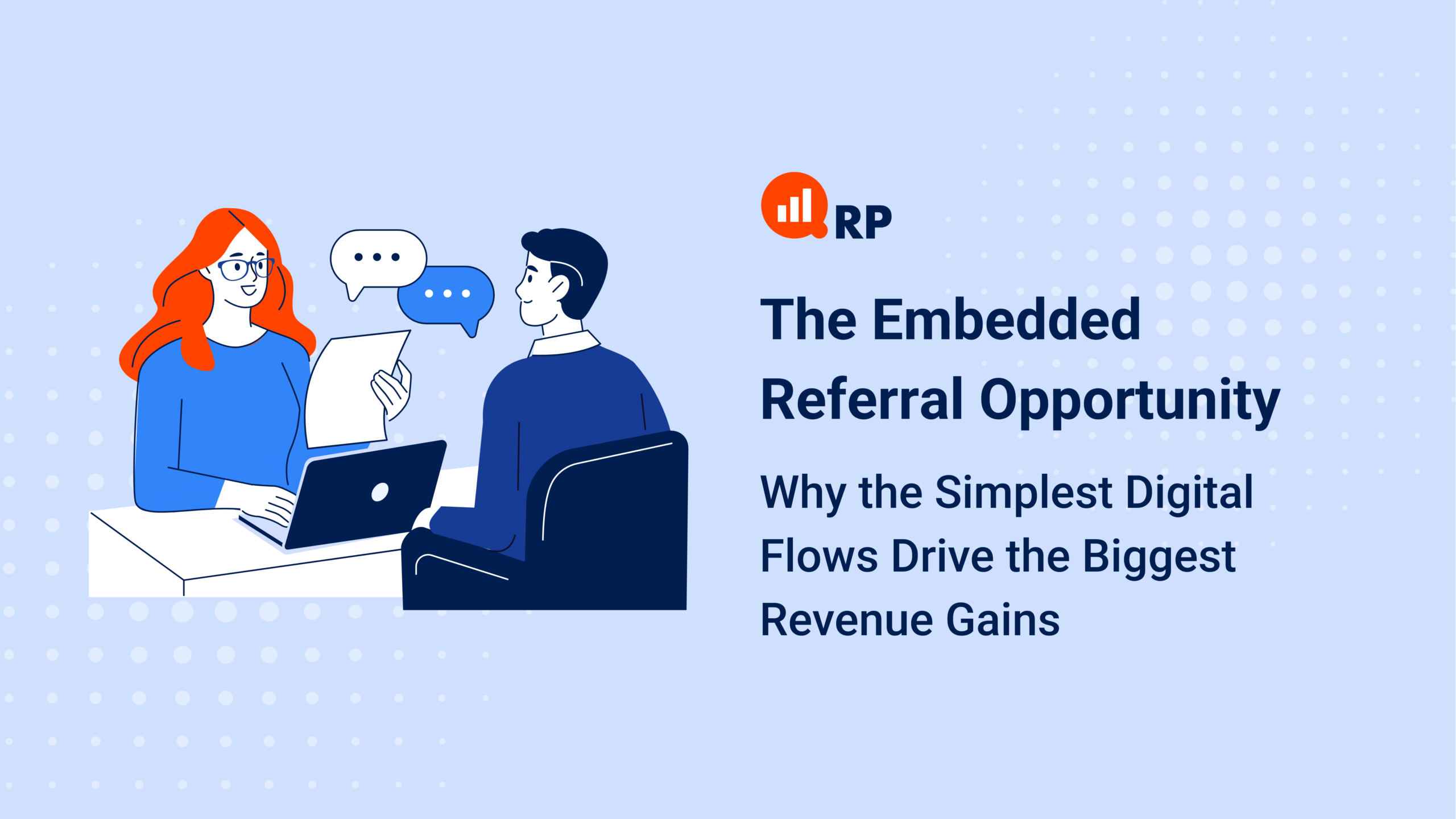
The Embedded Referral Opportunity: Why the Simplest Digital Flows Drive the Biggest Revenue GainsKen Holmes|
April 20, 2026- Thought Leadership
The word “embedded” gets thrown around a lot in insurance technology circles. It has been stretched, oversimplified, and at times stripped of all meaning. But strip away the jargon and what you’re left with is a genuinely compelling opportunity — one that personal lines and commercial agencies leave on the table every renewal cycle.
The referral channel is where that opportunity is hiding. And it doesn’t require a six-figure technology investment to unlock it.
The referral problem most agencies don’t talk about
Ask any agency principal how their referral partnerships are performing, and you’ll get a confident answer. Ask them to show you the data, and the conversation goes quiet.
The reality is that most agencies are still running referral programs the same way they ran a decade ago — informally, manually and inconsistently. A mortgage broker passes a name to a producer over text. A car dealership drops a stack of business cards by the door. A financial advisor emails a client list once a quarter. These touchpoints generate activity, but they rarely generate insight, and they almost never generate the kind of measurable, repeatable revenue that a genuine referral program should produce.
The gap between the referral program agencies think they have and the one they actually have is where revenue is lost.
What “embedded” actually means for a referral partner program
“Embedded” doesn’t have to be difficult. It doesn’t have to be sophisticated.
What it does have to be is intentional. An embedded referral experience means that the insurance buying journey is woven directly into the moment a prospect is most motivated — when they’re closing on a home, financing a vehicle, reviewing their financial plan, or onboarding with a new employer. The trigger and the solution occupy the same space, the same screen, and ideally, the same conversation.
At QRP, we think about this in three stages that agencies frequently shortchange: the before, the during, and the after.
Most agencies invest almost exclusively in the during — the moment a referral lead arrives, and a producer picks up the phone. But the before (how you align with a referral partner on customer fit, product fit, and timing) and the after (how you follow up, gather feedback, and maintain momentum) are equally important to conversion and to the long-term health of the relationship.
The agencies that consistently outperform on referral revenue are the ones who treat these three stages as a single, connected journey rather than three separate hand-offs.
The case for low-tech entry points
One of the most practical insights from our work with agencies and their referral partners is that the highest-friction step in most referral programs isn’t the technology — it’s the transition from one party’s context to another’s.
A physical QR code on a card, a flyer in a waiting room, a single-click link in an email — these are not primitive solutions. They are frictionless entry points that meet the consumer where they are and move them into a structured digital flow without requiring them to search, navigate, or start over.
When paired with an automated campaign on the back end, even these simple triggers can initiate a fully trackable journey. A prospect scans a code at a mortgage closing, enters their information once, and moves seamlessly into a comparative quoting experience — all without a producer having to manage the handoff manually.
That’s embedded. And it works.
Where technology earns its keep: From first impression to lifetime value
The more sophisticated version of this approach is where QRP’s capabilities come into full view. As a comparative rater with end-to-end capability through Rate Call 3, QRP supports the entire digital buying journey — from the first impression a prospect has with a referral partner’s touchpoint, all the way through bind and into lifetime value tracking.
This matters because most technology platforms in the market solve for one part of that journey. They help you capture leads, or they help you rate, or they help you manage the agent workflow. Very few connect all of those pieces in a way that lets you measure ROI from the moment a referral partner sends someone your direction to customer renewal three years later.
When you add integrations like Canopy Connect — which allows prospects to pull their existing insurance information with minimal input, enabling pre-filled quoting experiences — the efficiency gains for both agents and consumers become tangible. Less time gathering information. Fewer drop-offs in the quoting flow. Higher conversion on leads that would otherwise go cold.
That is the compounding value of a well-constructed embedded referral program: better leads, better data, better customer experiences, and ultimately better retention.
What agencies should be thinking about right now
The agencies best positioned to capitalize on the referral opportunity in the next 12 to 24 months are the ones doing three things today:
Aligning with partners before the first lead arrives. The most common reason referral programs underperform is a mismatch between what the referral partner’s customers need and what the agency is set up to deliver. That alignment conversation — about customer profile, product fit, and realistic timing expectations — has to happen before the first lead, not after the fifth one falls through.
Building trust through the process, not just the outcome. Referral partners refer because they trust the agency to take care of their customers. Every touchpoint in the referral journey is either building or eroding that trust. A seamless, automated experience that keeps the referring partner informed and the customer moving forward builds confidence in the relationship in a way that a follow-up phone call can’t.
Closing the feedback loop. The agencies that improve fastest are the ones that treat every referral as a data point. What converted? What didn’t? At what stage did prospects drop off? That feedback, systematically gathered and shared with referral partners, turns a transactional relationship into a strategic one — and makes the next cohort of leads meaningfully better than the last.
The human element isn’t going anywhere
It would be easy to read a piece about embedded flows, automated campaigns, and AI-assisted quoting as an argument that technology is replacing the agent. It isn’t.
The agent remains the indispensable center of this model. Technology’s role is to eliminate the low-value friction — the manual data collection, the information hand-offs, the follow-up tasks that fall through the cracks — so that producers can spend their time doing what no platform can replicate: Building relationships, interpreting coverage needs, and earning the trust that turns a one-time sale into a long-term client. The future of the referral channel isn’t a choice between digital and human. It’s a design question about which parts of the journey technology should own so that people can own the parts that matter most.
-
Real User Feedback: Effort Is the Real BarrierAimee Dunn|
April 20, 2026- UserTesting Research
Consumers Don’t Avoid Comparing Because They Don’t Care — They Avoid It Because It Feels Like Work
Insurance shoppers say they want better rates. But many don’t act.
In our recent Insurance survey, the top reasons for delaying comparison were effort-driven:14% expected it to be complicated
11% didn’t want to deal with switching
11% thought it would take too long
9% didn’t know where to startConsumers aren’t choosing to stay — they’re defaulting to inaction.
For carriers, the implication is clear:
- Reduce perceived complexity
- Show speed and ease upfront
- Reinforce outcomes early
The biggest competitor isn’t another carrier. It’s inertia.
Where QRP fits:
QRP simplifies the path to comparison by streamlining data inputs and delivering fast, accurate quotes — reducing both the real and perceived effort required to get started.” -
Real User Feedback: Inside the Chatbot ExperienceAimee Dunn|
February 15, 2026- UserTesting Research
The Best AI Entry Point? Let the User Decide
Shoppers want support on their terms. The best AI feels available, not intrusive.
Placement is everything. In our test, an AI tool that popped up uninvited was dismissed almost immediately. But when the entry point was placed clearly at the top of the quotes page—ready when the shopper wanted it—users leaned in.
Insurance shoppers want help, but they want to be in the driver’s seat. Giving them control over when to engage with AI makes the experience feel supportive, not pushy.
-
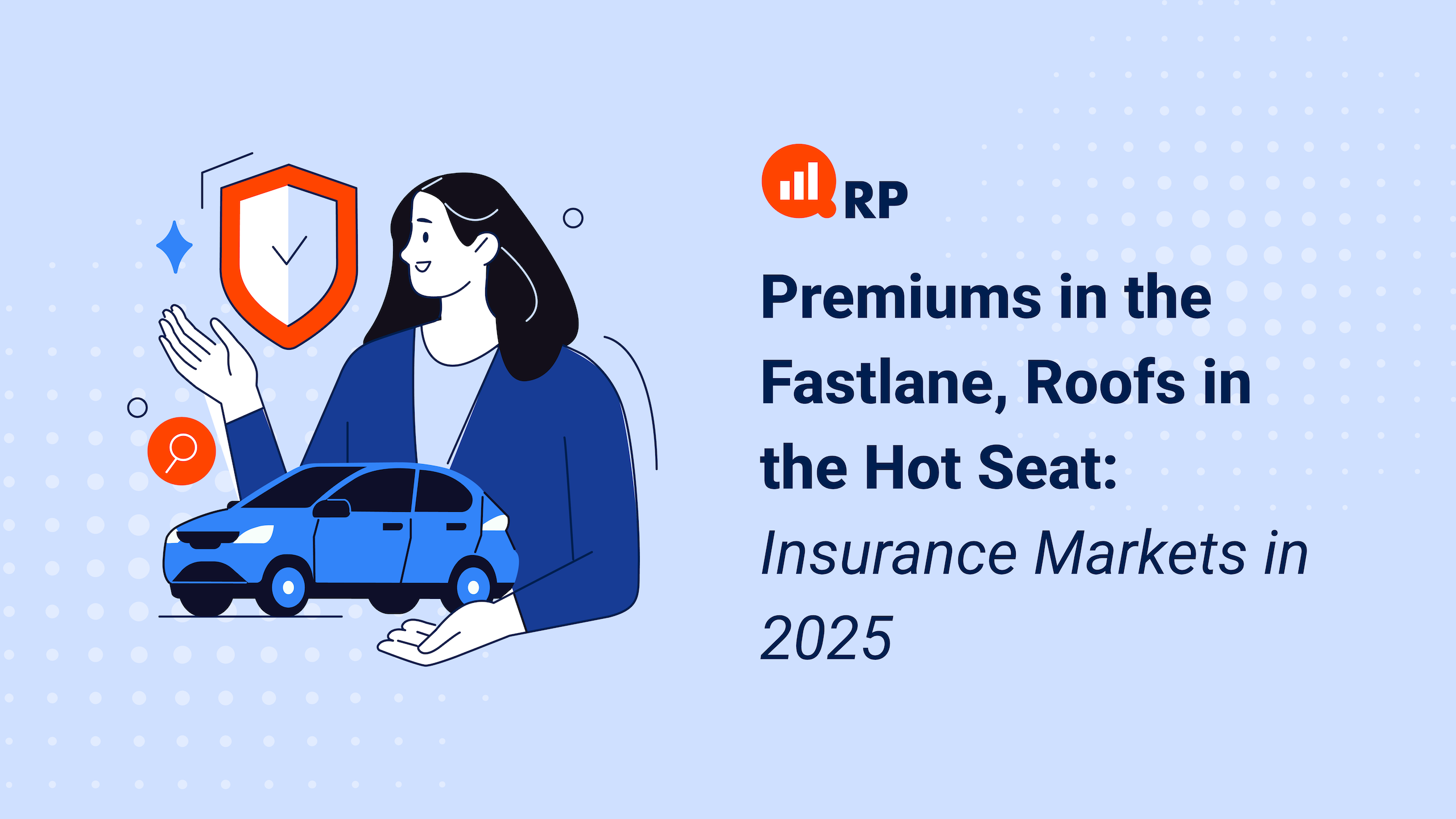
Premiums in The Fastlane, Roofs in The HotseatKen Holmes|
January 21, 2026- Industry Highlights
Insurance Markets in 2025
The insurance landscape in 2025 tells two stories: auto markets are stabilizing, while homeowners insurance is under mounting strain.
After years of steep hikes, auto insurance rates rose just 5.3% year-over-year (July 2024–July 2025), far below the double-digit surges of prior years. This shift reflects increased consumer shopping (up 10% in Q2) and regulatory interventions, including California raising liability minimums in January and North Carolina negotiating hikes down to ~5%. Together, these changes highlight stronger consumer leverage and oversight reshaping the market.
Key Takeaways
- Auto: Rates up 5.3%, competition rising, regulators actively moderating costs.
- Homeowners: Premiums & deductibles surging, 17% hike by State Farm in CA, NFIP under financial strain, coverage shrinking in climate-risk regions.
Sources: Insurance NewsNet Auto Insurance Rates Stabilizing in 2025; Auto Body News U.S. Auto Insurance Shopping Surges 9.4% in Q2 2025; California Department of Insurance New Year Changes for Insurance; San Francisco Chronicle State Farm Premium Hike Approval.
-
Real User Feedback: Inside the Chatbot ExperienceAimee Dunn|
January 21, 2026- UserTesting Research
More Detail = More Action
When shoppers see more context, they take more action. The right comparison format makes all the difference.
We tested two AI-powered layouts: a simple side-by-side table and a more comprehensive version with deeper details.
The winner was clear.
Users overwhelmingly preferred the comprehensive comparison table, praising the extra detail and finding it easier to take the next step. Instead of closing the chat or hesitating, they were more likely to click “dive deeper.” For agencies and carriers, this shows the power of structured, scannable content that gives shoppers the confidence to keep moving forward.

We’d Love to Hear From You
The QRP team is always ready to help—whether you need answers, materials, or a quick demo, we’re here and excited to support you.